Aug 18, 2026 · 1,994 views · 8 min read
How I threw a fiesta patronal
A childhood dream come true, in honor of my parents.

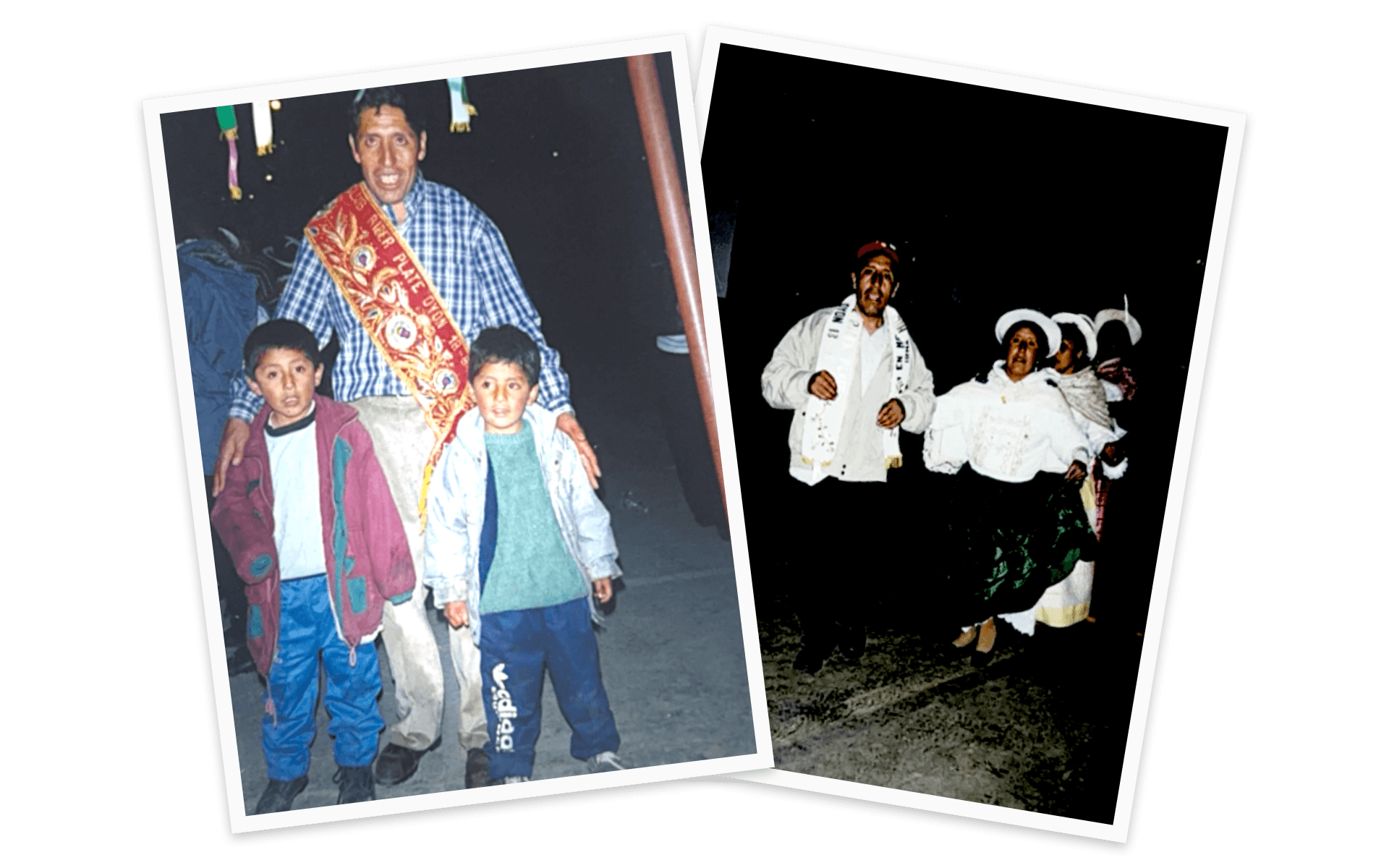
In 2006 I was old enough to remember. My parents organized the ribbon tournament and a bullfighting afternoon in Oyón. I saw the whole family together, my cousins happy, that joy you share, and I thought: someday I’ll do this myself.
Twenty years later, it was my turn.

This year I was the padrino de cintas on August 18th, at the fiesta patronal in honor of the Virgin of the Asunción: the one who provides the ribbons and the scarves for the dance. I’m going to tell you how the whole organization went, but to really understand why it meant so much, we have to go back a little further.
That wasn’t the first real memory, just the first one of mine. From what my siblings and my parents tell me, they had organized it a couple of times before, long before I was born, when my older siblings were still little.
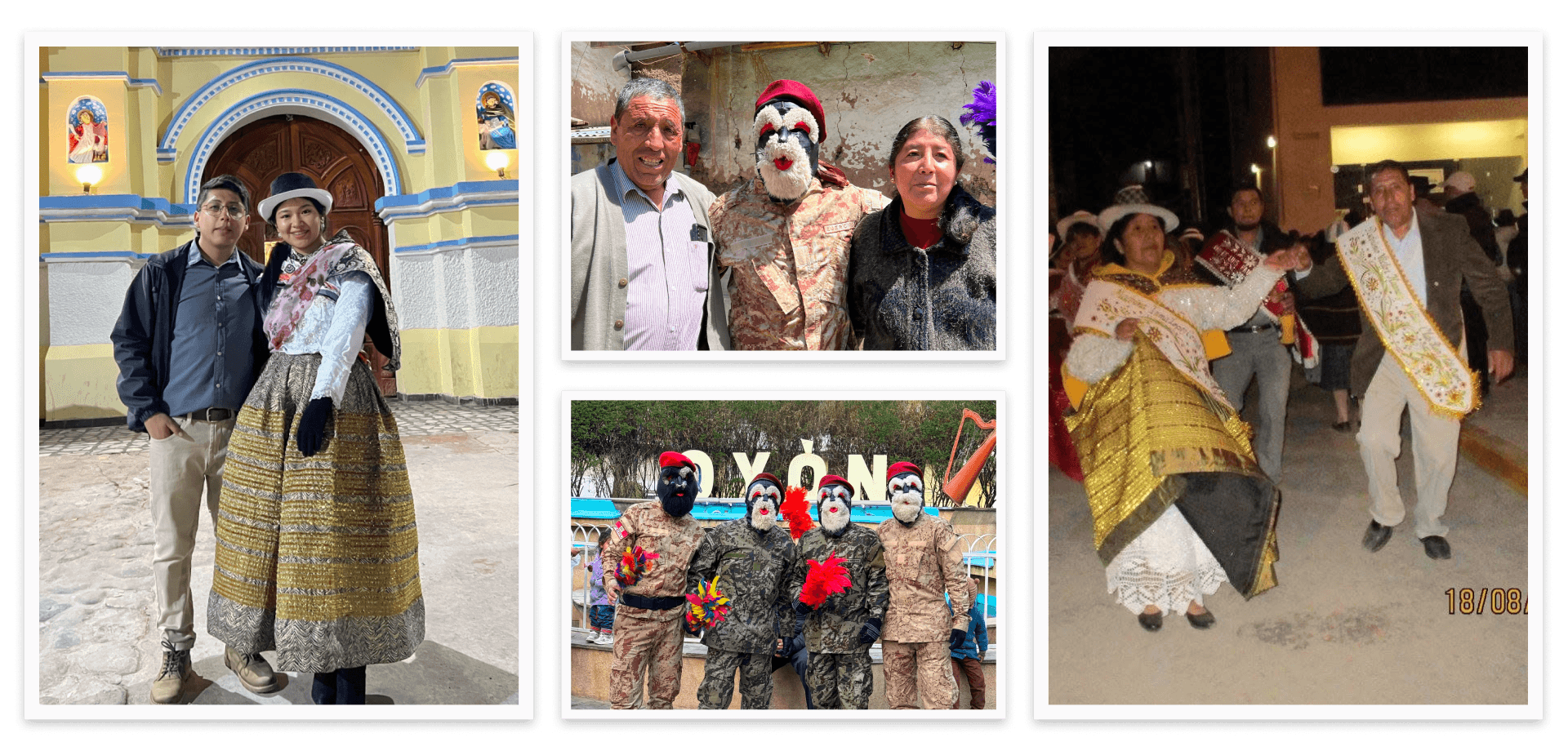
The years went by and I never missed a thing. Every August I danced the ribbon tournament with my cousin and, since primary school, I played the negrito in the reenactment: somehow, it brought me closer to the Virgin of the Asunción. That’s how I grew up in my beloved Oyón, part of every corner of the fiesta. In 2016 my dad organized it again, and I watched, I learned, and I kept the idea in a corner.
It didn’t happen the first time
The padrinos are chosen at the previous year’s fiesta, so you know well in advance that it’s your turn. I wanted to join for 2025, but someone was already signed up. When that person dropped out, they called me at the last minute. I almost agreed to do it in a month. I got to say yes for a second, before doing the math: band, retablo, quotes, permits. I said no. A fiesta patronal isn’t put together in a month, and I wasn’t going to do it halfway.
And then came August 18th, 2025. The president of the Club Social River Plate came looking for me at home and offered me the mayordomía for the following year: exactly one year ahead, on the very day of the fiesta. It wasn’t just any club. My dad was a member his whole life, and when he was president he won the championship three years in a row, from ’93 to ’95. Red and white since before I was born.
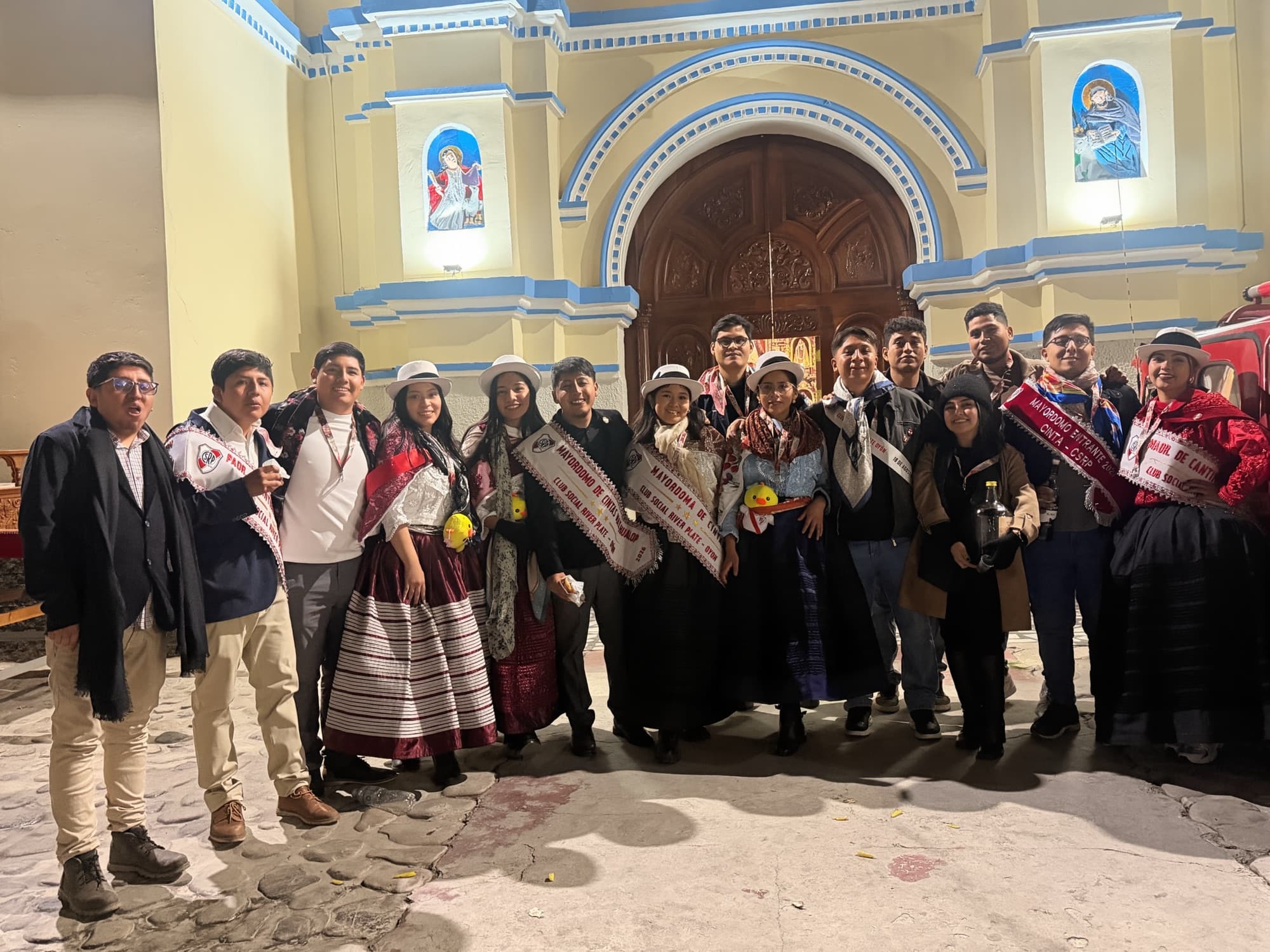
My younger brother joined as padrino de cantina. We signed the minutes book and that’s where it all began.
It was only once I was deep into the mayordomía that we noticed, looking back, something curious. 2006, my parents. 2016, my dad again. 2026, me. Every ten years, without planning it, someone in the family ended up organizing this fiesta.
And that’s when I understood 2025. I’m glad it didn’t happen. If it had, the ten-year coincidence would have been broken. Instead it fell into place on its own, as if there were no other option. Almost as if fate knew it had to be this year and not the one before.
Designing a party is like designing a product
From the moment you accept the role, you start thinking about everything that comes with being padrino de cintas: donating the ribbons and the scarves, the music, the keepsakes and all those small details that, in the end, make the fiesta turn out beautiful. And I saw it as what I do for work: design.
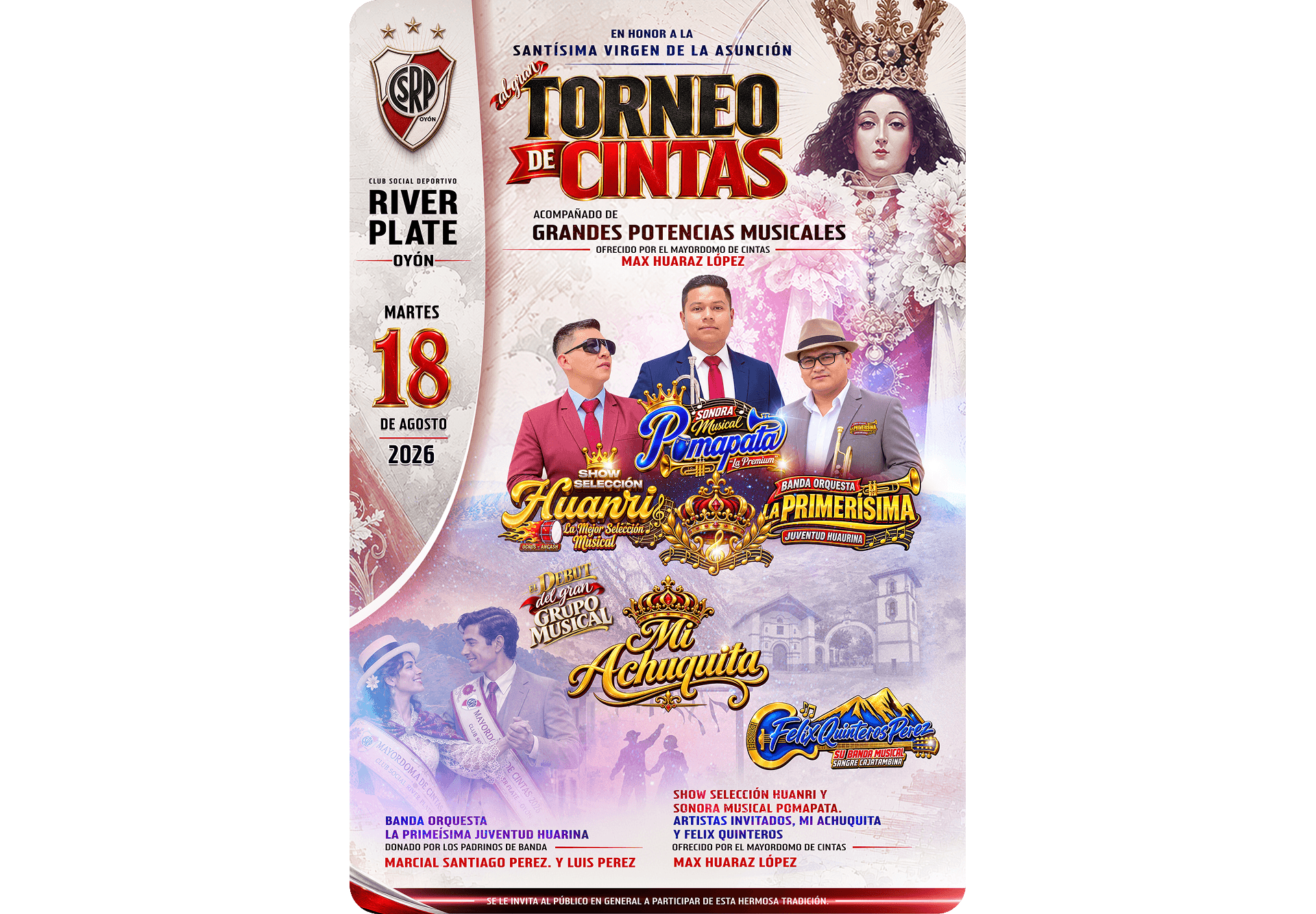
For the music I wanted top bands from Áncash: Show Selección Huanri and the Sonora Musical Pomapata. And the third one came out of a joke. I traveled to Cajatambo with my parents to see the town’s bullfighting afternoon and, that night, at the dance with local friends and my cousin, somebody said between laughs: “what if we hire Félix Quinteros Pérez?” It was 4 a.m. and the drinks were helping. The next day: “hey, did we sign yesterday?” And in the end, it happened 😄

From sketch to final object
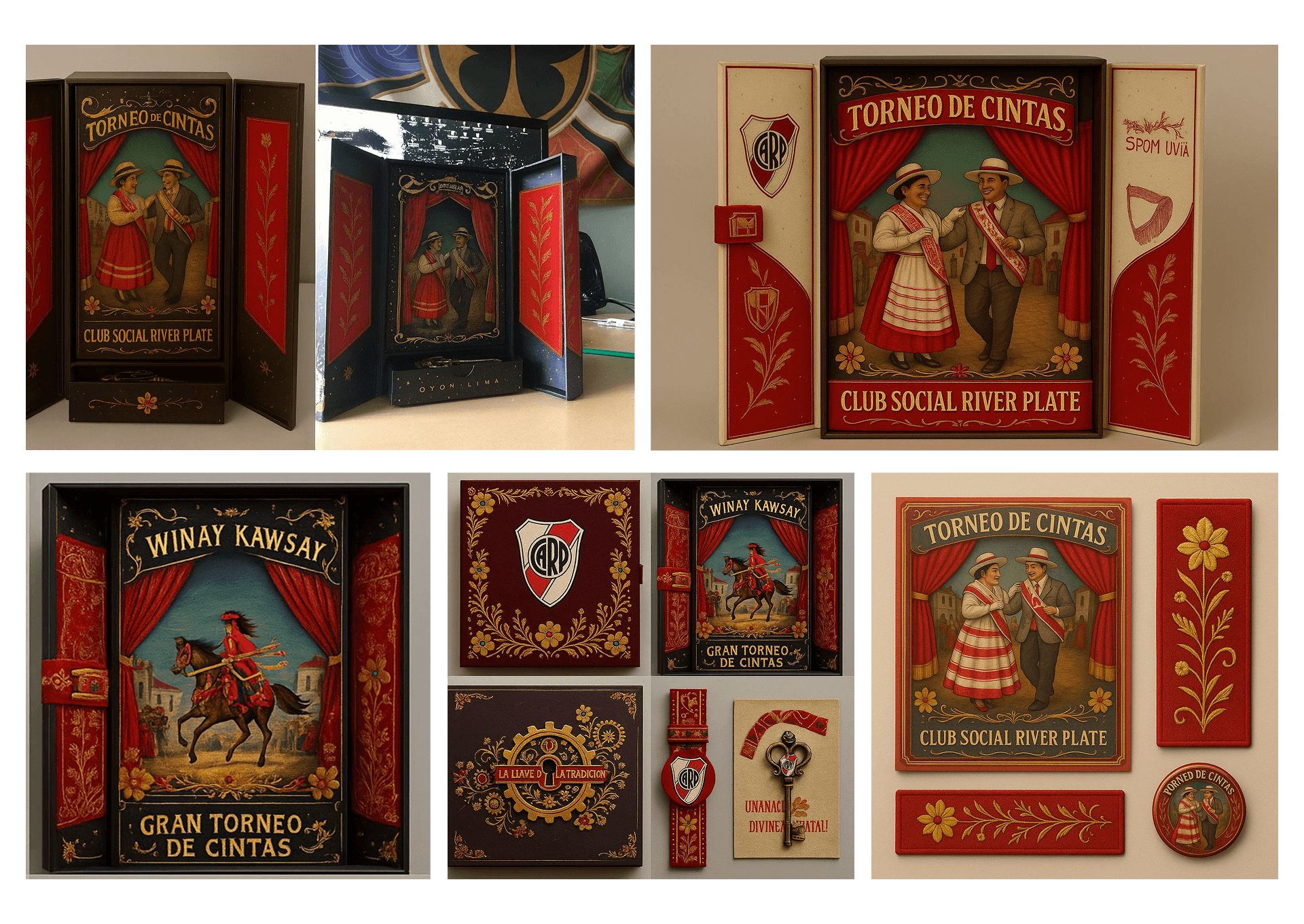
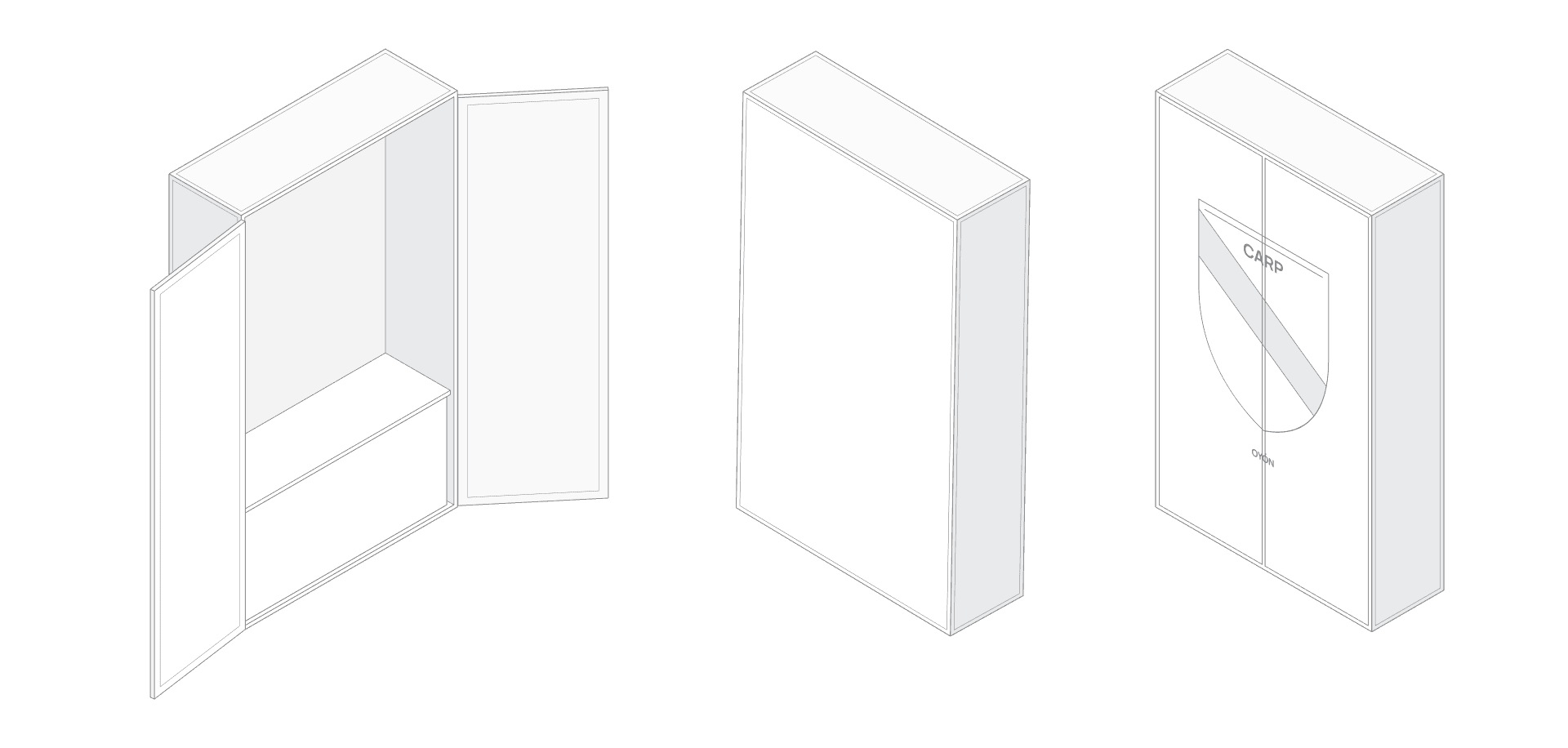
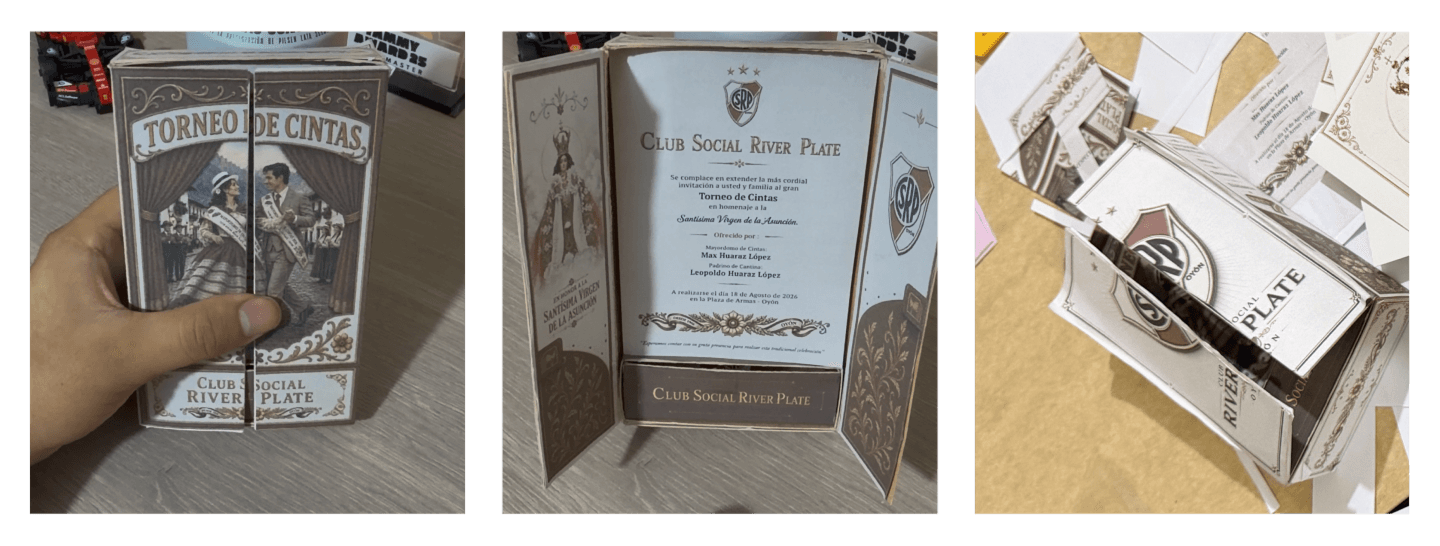
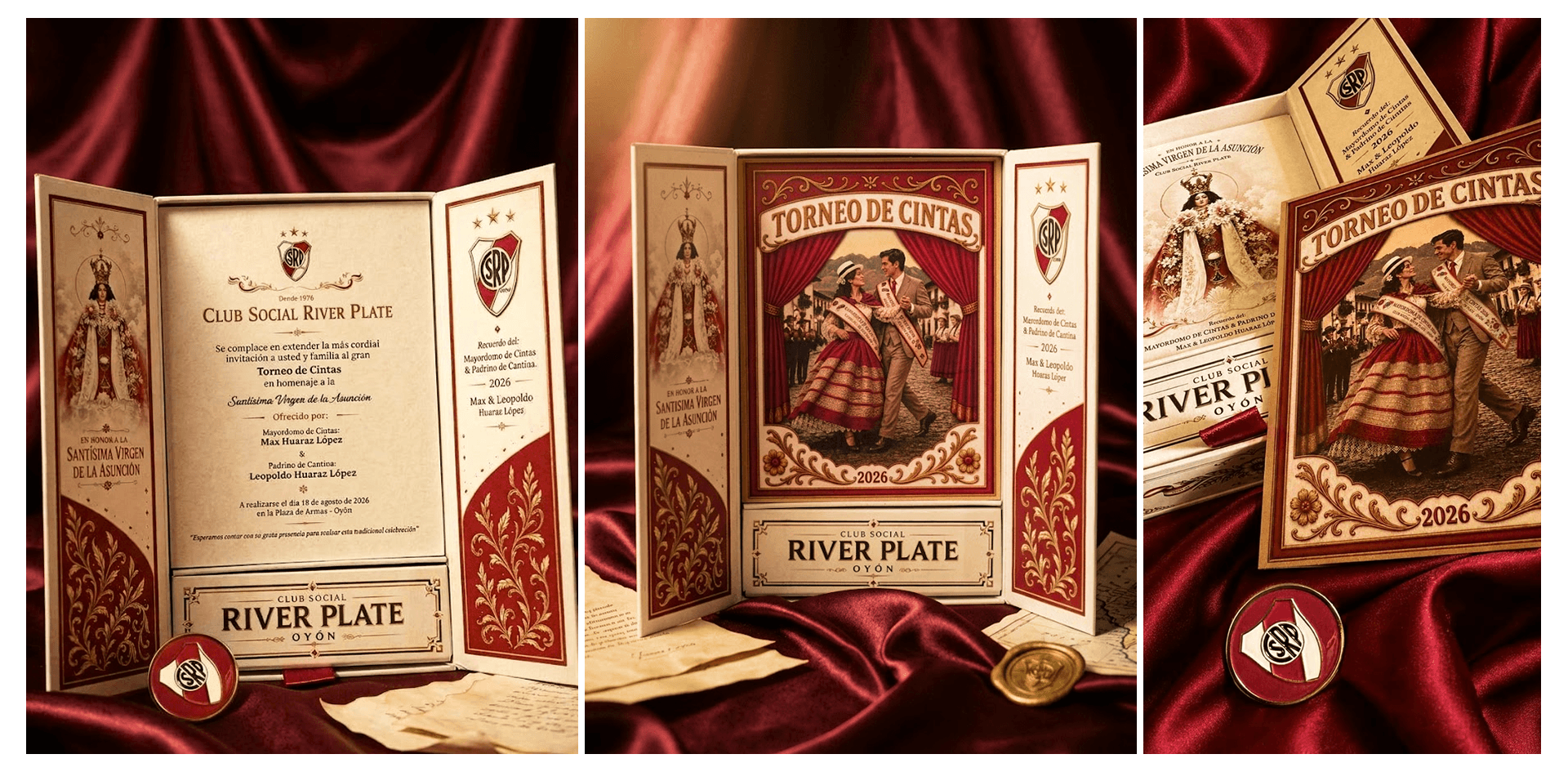
The invitation couldn’t be a PDF. I wanted something formal, something you could touch. Since 2012 I’d had an image stuck in my head: the Tomorrowland After Movie, with that book-box that opens like a portal. I thought: what if my invitation were a retablo that opens and has everything inside?
My brother and I started sketching. We used AI to boost those sketches: generating variations, exploring references inspired by that Tomorrowland box, seeing what worked and what didn’t. From there we built the first prototype and started refining proportions, details and colors. We stayed up several nights. When the final design was ready, we went looking for who could make it real: we got quotes from several suppliers until we found a good price and a good finish. That’s how the retablo stopped being a sketch and became an object, each one with the club’s pin.
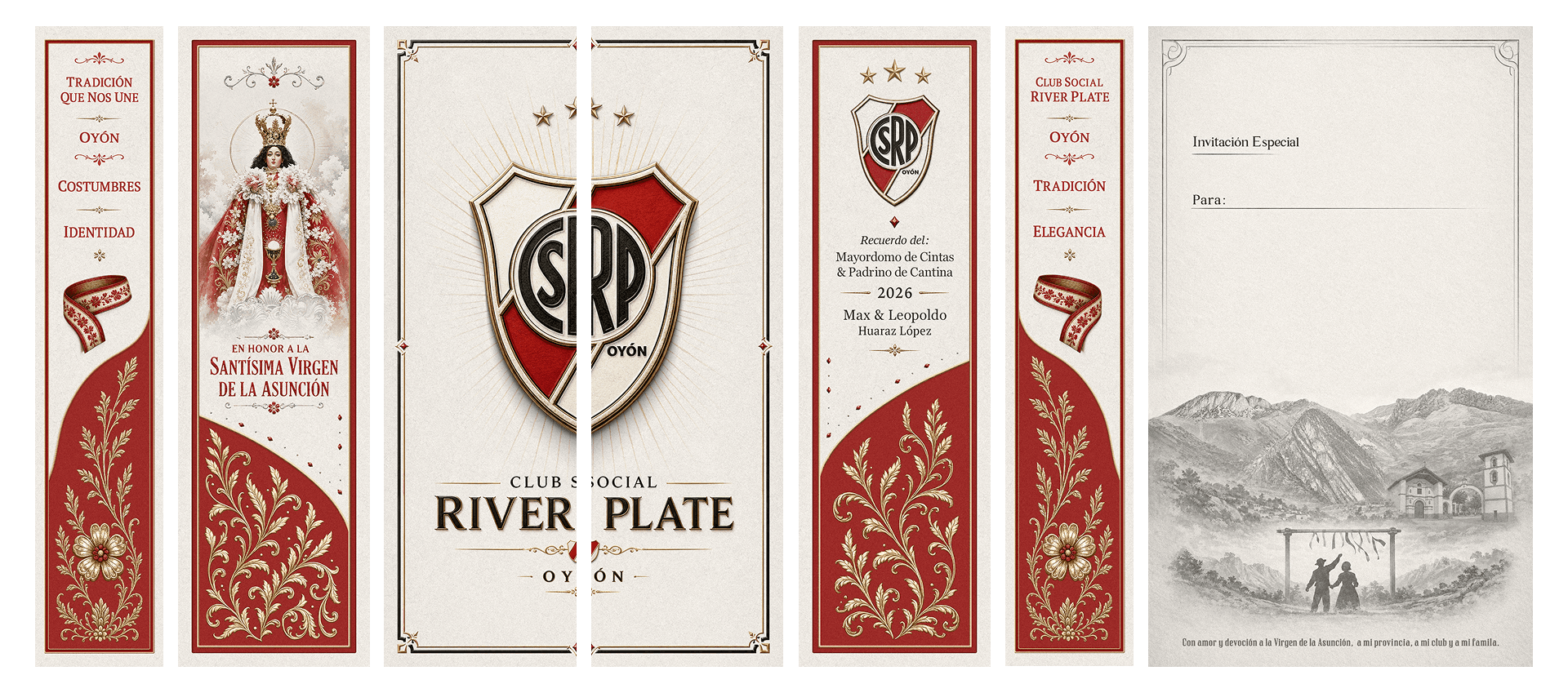

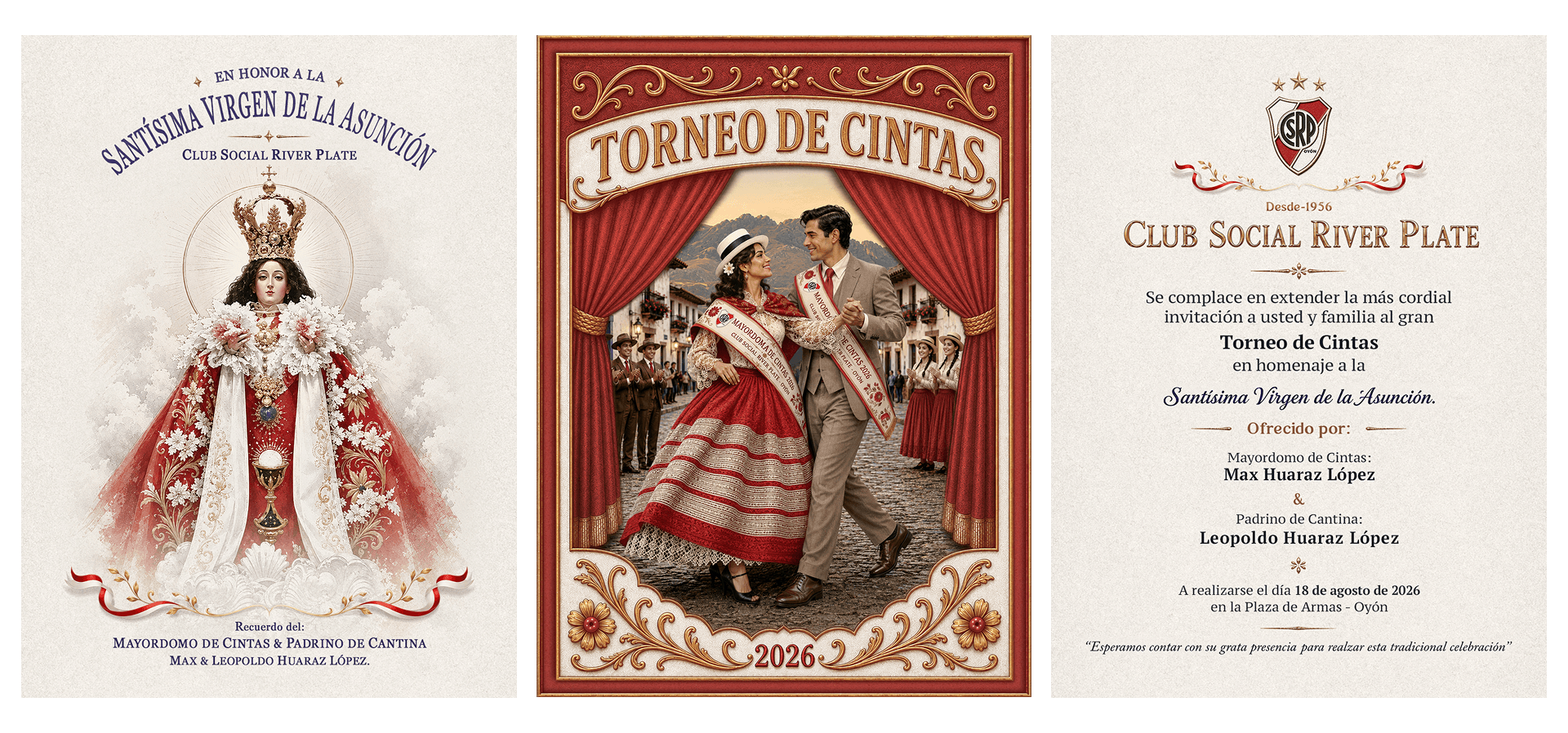
It was the same with the mayordomía sash. I could have ordered one of the usual ones, but I wanted something unique, something that was my taste and identified me without leaving the tradition. I designed it in Figma: white, with red grecas, red lettering and a ruby-like shine. Along the way we learned how these sashes are made and realized it wasn’t that hard. Who knows, maybe a business comes out of it.

Looking at it now, it had everything a product has: a tradition as the starting point, a budget as the limit, a prototype before the final object and several sleepless nights. Only this time, the user was an entire town.
And it left me two things clear. A fiesta like this is planned in months, not weeks. And when you design what identifies you, the invitation, the band, everything, the fiesta is still everyone’s, but it feels like yours.
The eve
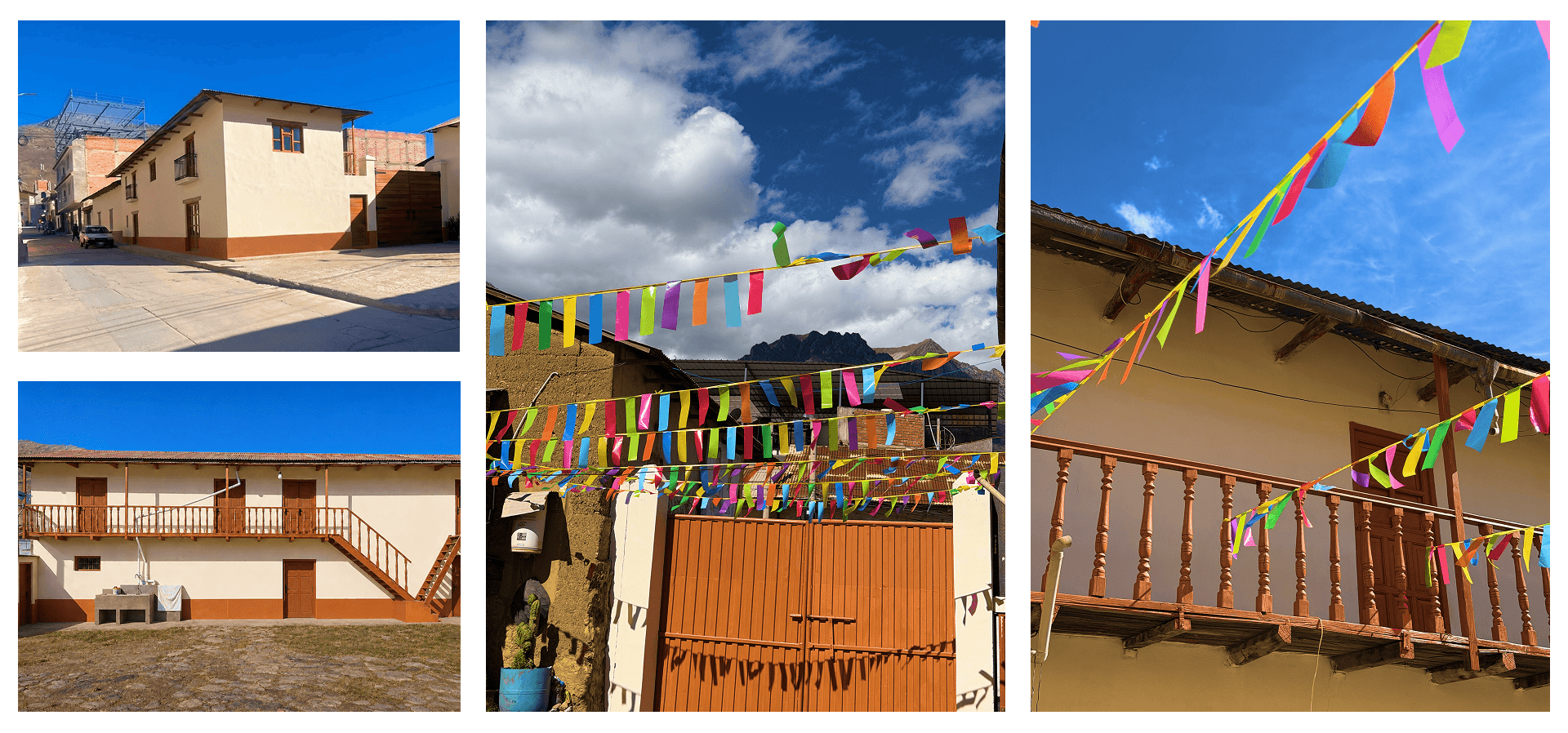
We had started touching up the house months earlier, something we hadn’t done in many years, with that colonial Andean tone we love so much. And a day before, my siblings and I got to decorating the patio, so the guests would be amazed and everything looked super beautiful.
That night we did the traditional chachapada: we stayed up chewing coca leaf with my mom, my uncles, the whole family, until the small hours of the morning, with a calientito against the cold. Meanwhile the cooks never stopped, frying and cooking all night the pari cajatambino, the signature dish of Cajatambo. We cook it in Oyón too, but the cultural credit belongs to them: our province once belonged to Cajatambo, and that heritage shows even in the pot.
The day
From the morning we were at the Virgin’s procession, and as soon as it ended, full speed: filling carrizos with ribbons, getting everything ready to receive the bands.
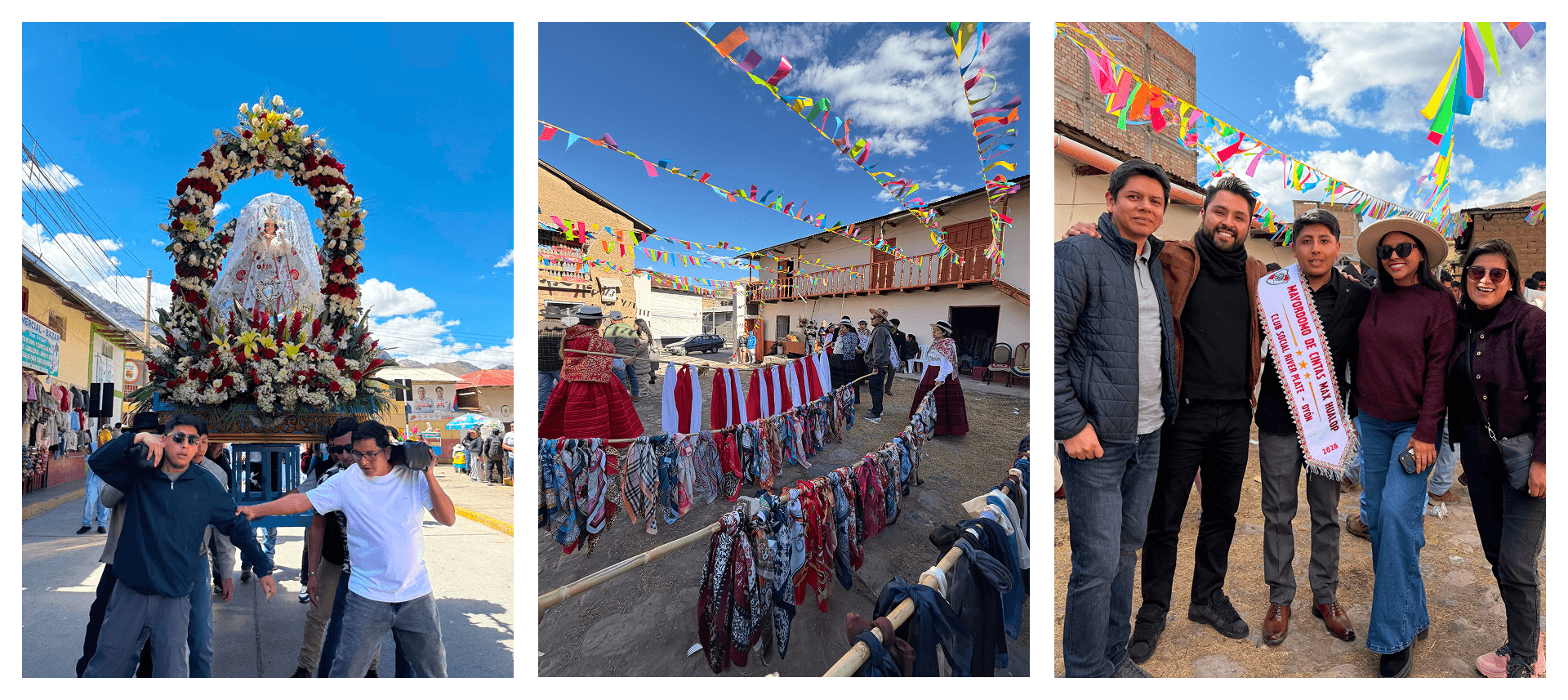
The first to arrive was the Sonora Musical Pomapata, and we went out to welcome them the way it should be done: in pasacalle. We headed straight to the church, because tradition says every band greets the Virgin first, our Mamá Achuquita, as we lovingly call her, with a guayno right in front of her door. Only then did we head back home, another pasacalle, so they could have lunch and get ready for the night.
As I walked into the house with that first band, my mom hugged me tight. And she said:
I’m proud of you, and of everything you’re achieving, my maquito.
“Maquito,” she calls me, out of love. My chest tightened. Everything I am and everything I do, in spite of everything, is for her and because of her.
With the second one, Show Selección Huanri, we repeated the ritual: from the cemetery to the church, the guayno in front of the door and another pasacalle to my house so they could have lunch too. And then he showed up: Félix Quinteros Pérez, with his whole group, walking into my house. Yes, the same “did we sign yesterday?” guy, the one we had hired at 4 a.m. in Cajatambo. I had the pleasure of welcoming him, and he stopped to eat as well.
Then came one of the most beautiful parts for me: collecting the ribbons and the scarves. Not just the ones you donate as a padrino, but everything people, with so much love and goodwill, hand us when we go out in pasacalle with the bands. My brother and I split the bands so nobody had to wait and walked the streets of Oyón, visiting the houses of the people who were expecting us. In every house they welcomed us with affection, with their thanks, their toast 🥂 And so, house by house, we gathered all the ribbons until we met at the cemetery and entered the plaza together.
There we built the arch with all the ribbons we had collected and started the traditional dance. The couples dance under the arch and catch the ribbons. It’s such a beautiful tradition, and so ours, that it has been kept alive from generation to generation. My brother, as padrino de cantina, started handing out his liquors, really good liquors, and the whole plaza cheered up.
When the dance ended came our traditional huaylashada, with the fireworks castles that lit up the whole night 🎆 And when that was over, came the artists’ show. There it’s no longer just the dance couples: the whole town dances. And I think that’s exactly what makes these fiestas beautiful, that we all end up being part of them.
My dad, on the other hand, said nothing to me all day. But in his eyes I understood everything: I was no longer the boy who dreamed. I had shown that, despite the clashes we had at some point, I could keep going like this, and you could tell he was proud. That night, a few drinks in, he confirmed it with words: he told me he was very proud of me.
And that, coming from him, meant everything.
Thank you
In the end I was exhausted, but happy. With the satisfaction of having kept my word to our Mamá Achuquita and of everything turning out beautiful, just as I had hoped from the start. The next day the club members congratulated me, and just hearing them I knew it was worth it.
But what I take with me most is my whole family moving at once. My brothers, with me from the first sketches to the very last late night. My uncles and cousins, awake until dawn at the chachapada, waiting for everything to go well. My mom, with her hug. My dad, with his gaze. I put my name on the sash; they gave their unconditional support, that moral backing you can’t see but that holds everything up.
Because in the end, as a padrino, you only add your grain of sand. The fiesta belongs to everyone. It’s for the whole town and, above all, for keeping alive this tradition that is part of us, of our identity ❤️
Thanks to the Virgin of the Asunción, to the Club Social River Plate, to my family and to all of Oyón.
If the math holds, the next one would be 2036. It’s a long way off. We’ll see who steps up.